

TechnoCasual is technical clothing for everyday life. It combines performance materials and functional design with clean, familiar silhouettes that work in ordinary settings — work, travel, restaurants, commuting and weekends.
There is a large gap between ordinary casual clothing and the most recognisable version of techwear. On one side are cotton chinos, conventional shirts and simple jackets. On the other are highly technical shells, articulated cargo trousers, modular bags, straps, hardware and a deliberately futuristic look.
TechnoCasual occupies the useful space in between. The aim is not to make clothes look more technological. It is to take the parts of technical clothing that genuinely improve daily life — stretch, weather protection, breathability, lighter weight, easier care, secure storage and freedom of movement — and put them into clothes that still feel natural in everyday settings.
TechnoCasual in one sentence
Performance fabrics. Clean silhouettes. Practical design.
A TechnoCasual garment should ideally do something better than its conventional equivalent without demanding that you dress around it. Technical trousers should still look like good trousers. A waterproof jacket should work over a shirt or knit. A merino polo should be useful because it regulates temperature and travels well, not because it advertises its fibre content.
TechnoCasual vs techwear
Techwear is a broad category rather than a single uniform. At its functional end it uses technical fabrics, weather protection, considered storage and construction designed around movement. It is also strongly associated with darker palettes, urban utility and futuristic styling. TechnoCasual shares the functional DNA but turns the visual volume down.
| TechnoCasual | Techwear | Ordinary smart casual | |
|---|---|---|---|
| Main goal | Everyday style with useful performance | High function with an urban technical identity | Familiar appearance and versatility |
| Fabrics | Merino, stretch blends, technical cottons, matte nylons, breathable shells | Membranes, technical nylons, softshells, laminates, advanced synthetics | Cotton, wool, denim, conventional blends |
| Design | Clean, discreet utility | Often articulated, modular or visibly technical | Traditional pockets and construction |
| Colour | Black, navy, grey, olive, stone and restrained colour | Often black, charcoal and dark neutral palettes | Anything from neutrals to seasonal colour |
| Where it works | Office, travel, restaurant, commute, weekend | Urban movement, weather, travel, technical layering | Work and social use, with less emphasis on performance |
The five principles
1. Function should be real
A cargo pocket alone does not make a garment technical. The useful question is whether the fabric, construction or feature solves a problem. Does the jacket handle rain? Does the trouser move comfortably? Does the shirt recover from creasing? Is the pocket secure and positioned sensibly? Technology should earn its place.
2. The silhouette should stay wearable
TechnoCasual favours recognisable shapes: tapered trousers, overshirts, polos, simple shells, knitwear and clean trainers. The difference is often hidden in the material or construction. That makes the clothes easier to combine with pieces you already own.
3. Performance should be quiet
Matte surfaces generally work better than shiny synthetic finishes. Concealed zips usually work better than decorative hardware. Stretch is useful; looking like gym wear is not. A well-designed TechnoCasual piece can be technically sophisticated without broadcasting it.
4. Everyday conditions matter
Most people are not climbing mountains on the way to work. They are walking through rain, sitting on trains, carrying a laptop, moving between heated buildings and cold streets, packing for a weekend or spending hours on an aircraft. TechnoCasual judges clothing against those situations.
5. Fewer, more capable pieces beat specialist wardrobes
The ideal garment crosses boundaries. A pair of trousers can work on the flight and at dinner. An overshirt can serve as an indoor layer and light outerwear. A merino top can handle repeated wear when travelling. Versatility is part of the performance.
What fabrics belong in TechnoCasual?
There is no mandatory material list. The point is useful performance. That can come from natural fibres, synthetics or combinations of both.
- Merino wool for temperature regulation, comfort and repeated wear.
- Stretch cotton blends where a conventional appearance matters but movement does too.
- Technical nylon and polyester when light weight, drying speed, durability or weather resistance matter.
- Waterproof-breathable shells when genuine rain protection is required.
- Treated or engineered fabrics for crease resistance, stain resistance or easier care — provided the benefit is meaningful.
The important distinction is between a technical feature and technical theatre. More zips, panels and pockets do not automatically make a garment better.
Does TechnoCasual have to be black?
No. Black, charcoal and grey naturally suit the aesthetic because they make technical details visually quieter, but they are not rules. Navy, olive, stone, dark brown and muted seasonal colours can work just as well. The defining idea is restrained, versatile design rather than a compulsory dystopian palette.
What TechnoCasual is not
It is not simply another name for techwear. It is not hiking gear worn in a city. It is not a black cotton cargo trouser with decorative straps. And it is not “smart casual” with a technology label added for marketing.
The category only becomes useful if the garment combines real function with everyday wearability.
See the category mapped
The TC Index adds a 0–100 classification score to the map. It rewards the balance between technical function and everyday wearability and then applies a smaller modifier for discreet design integration. The score describes category fit—not quality, value or durability.
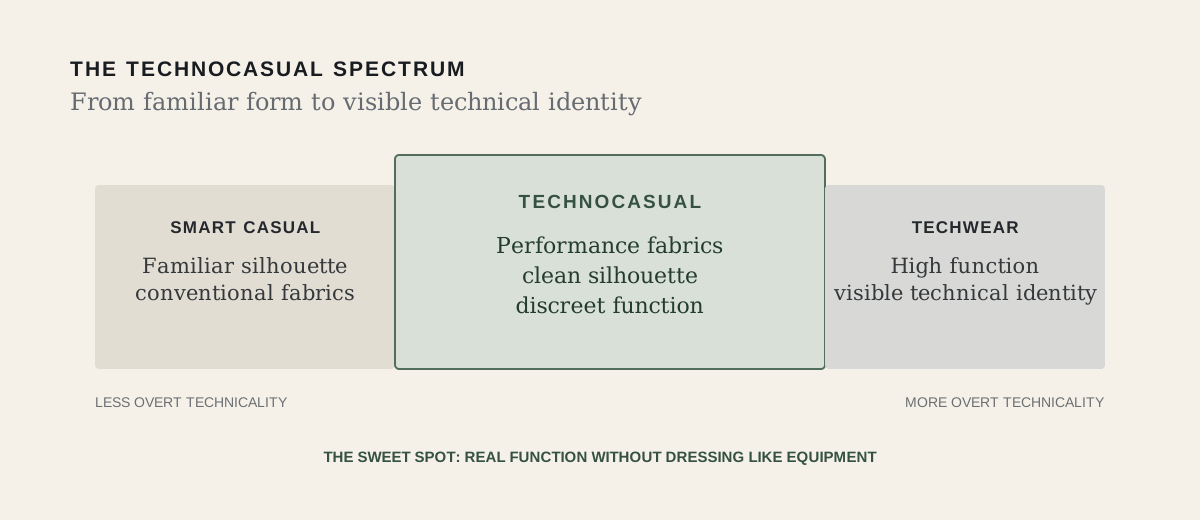
A definition becomes more useful when it can be applied consistently. The TechnoCasual Spectrum shows the progression from conventional smart casual to full techwear, while the TechnoCasual Index 2026 plots representative garments against everyday wearability and technical function.
A simple TechnoCasual wardrobe
You do not need a complete new wardrobe. Start with one problem that conventional clothing solves badly.
- A pair of technical trousers that still look normal.
- A clean waterproof jacket that works over ordinary clothes.
- A merino T-shirt or polo for travel and temperature changes.
- An overshirt in a durable, weather-tolerant fabric.
- Minimal trainers or shoes that combine comfort with a restrained silhouette.
- A practical bag with secure storage and minimal visual clutter.
Those pieces can sit beside denim, Oxford shirts, knitwear and other conventional clothes. That is precisely the point.
Where did the term come from?
The word is not completely new. A 2016 Wool Lab trend report used “Technocasual” for a dynamic streetwear direction combining classic garments with high-tech accessories and technical fibres, including bonded, coated and treated fabrics. The idea already contained the tension that makes the term useful: familiar clothing on one side, material innovation on the other.
TechnoCasual.com uses the term more broadly for 2026: technical clothing that earns its place in normal life. That can include some pieces that fashion would call techwear, some that look almost like conventional menswear, and plenty in between.
The TechnoCasual test
1. Does this garment do something meaningfully better because of its material, construction or functional design?
2. Can I wear it in ordinary life without the technology becoming the outfit?
If the answer to both is yes, it probably belongs here.