
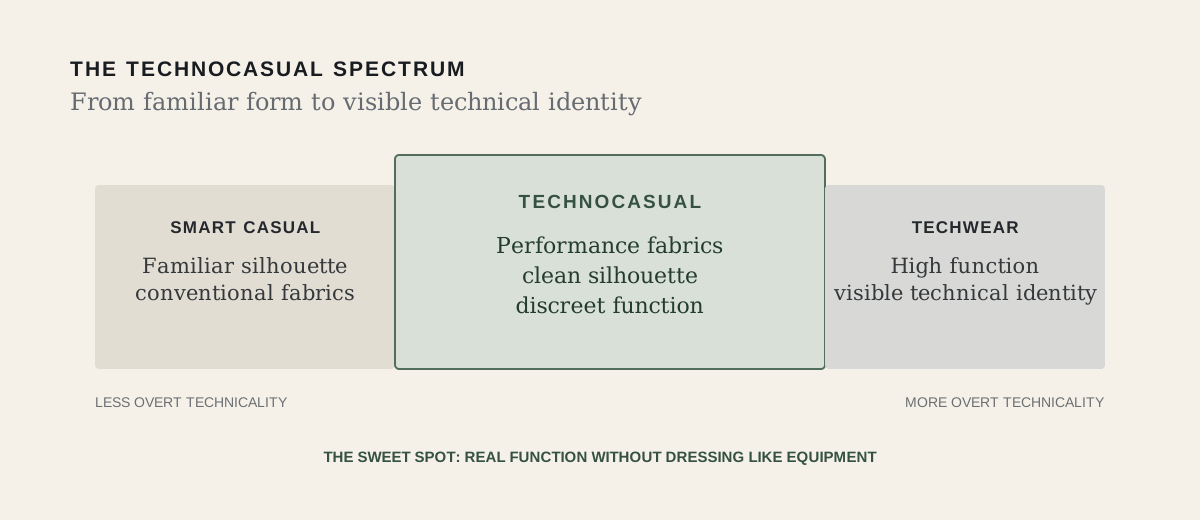
TechnoCasual is the middle ground: garments with genuine technical benefit that still look natural in ordinary social, work and travel settings.
Why a spectrum rather than a rigid category?
Clothing rarely sits neatly in one box. A conventional wool blazer may have extremely high everyday wearability but almost no weather protection or technical construction. A mountaineering shell may be exceptionally functional but visibly designed for a specialist context. TechnoCasual lives where those two priorities overlap.
Smart casual
At the left are familiar garments whose principal strength is social versatility: wool trousers, cotton chinos, Oxford shirts, simple blazers and conventional coats. They are easy to understand and easy to wear, but technical performance is usually secondary.
TechnoCasual
In the centre, the familiar form remains but the material or construction does more work. Think stretch chinos with a water-repellent finish, a wrinkle-resistant overshirt, a merino polo, a minimalist waterproof shell, travel denim with secure storage or tailored trousers cut from breathable softshell.
The visual rule is quiet performance: the garment should not need straps, hardware or conspicuous tactical details to prove that it is functional.
Techwear
At the right, technical identity becomes more visible. Articulated construction, modularity, advanced shells, cargo systems, highly engineered patterning and futuristic silhouettes can become part of the aesthetic rather than merely hidden functionality. TechnoCasual borrows from this world but lowers the visual intensity.
The practical test
Ask two questions: does it perform better than an ordinary garment? and would it still feel natural at work, at dinner, on a flight or walking through a city? If the answer to both is yes, it is probably in TechnoCasual territory.